
Jens Gyarmaty
Patricia Thielemann on Art, Mindfulness, and Inner Peace
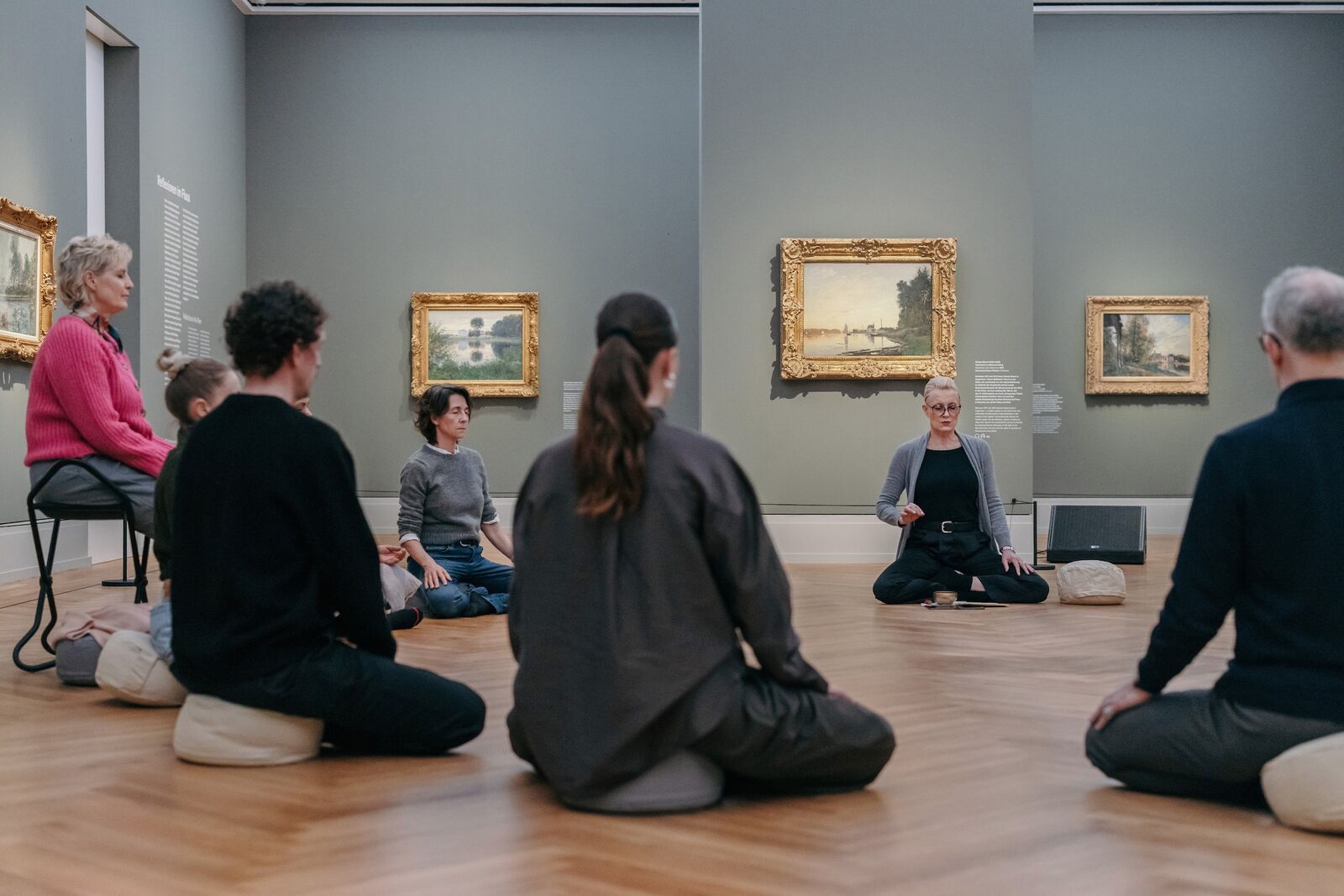
How does our perception change when we take time — for art and for ourselves? The Art and Meditation format, developed by Patricia Thielemann together with the Museum Barberini, begins precisely at this point: visitors are first guided into a state of calm — through short reflections, music, and breathing exercises. This simple pause acts as a transition: it slows the gaze, sharpens attention, and opens up a deeper connection to art.
Interview by Heike Faller
You say that many people no longer truly connect with art. Why is that?
Because they’ve lost the ability to connect. They know they’re standing in front of great art, but inwardly, nothing happens. And that leaves a kind of emptiness.
How do you explain that?
I think we’re exhausted by sensory overload. By images, by digital spaces, by constant input. It numbs us. And then we stand in front of a painting expecting it to move us instantly. If it doesn’t, frustration sets in — after all, the painting is considered a masterpiece.
So the problem isn’t with the art itself?
No. The art is powerful. But we are often not in the state to truly perceive it.
And that’s exactly where your format begins?
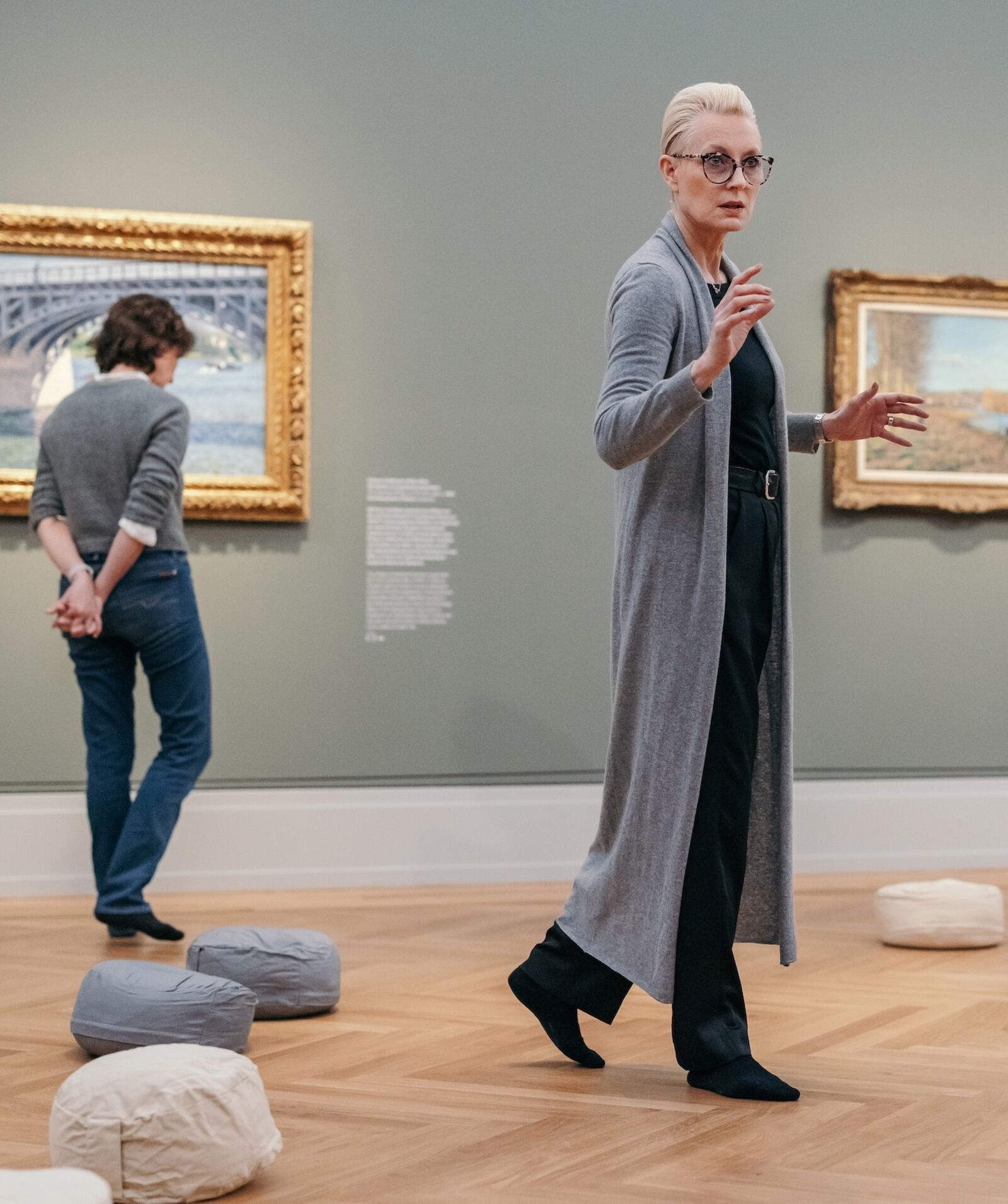
Yes. I try to create a space in which people can become receptive again in the first place — through breathing, concentration, and guided attention.
Many people would probably think: this is basically a yoga class in a museum.
I hear that often. But it’s precisely not about using art as a pretty backdrop. It’s about changing perception in a way that allows the art to have an effect.
Jens Gyarmaty
Jens Gyarmaty
What changes in concrete terms?
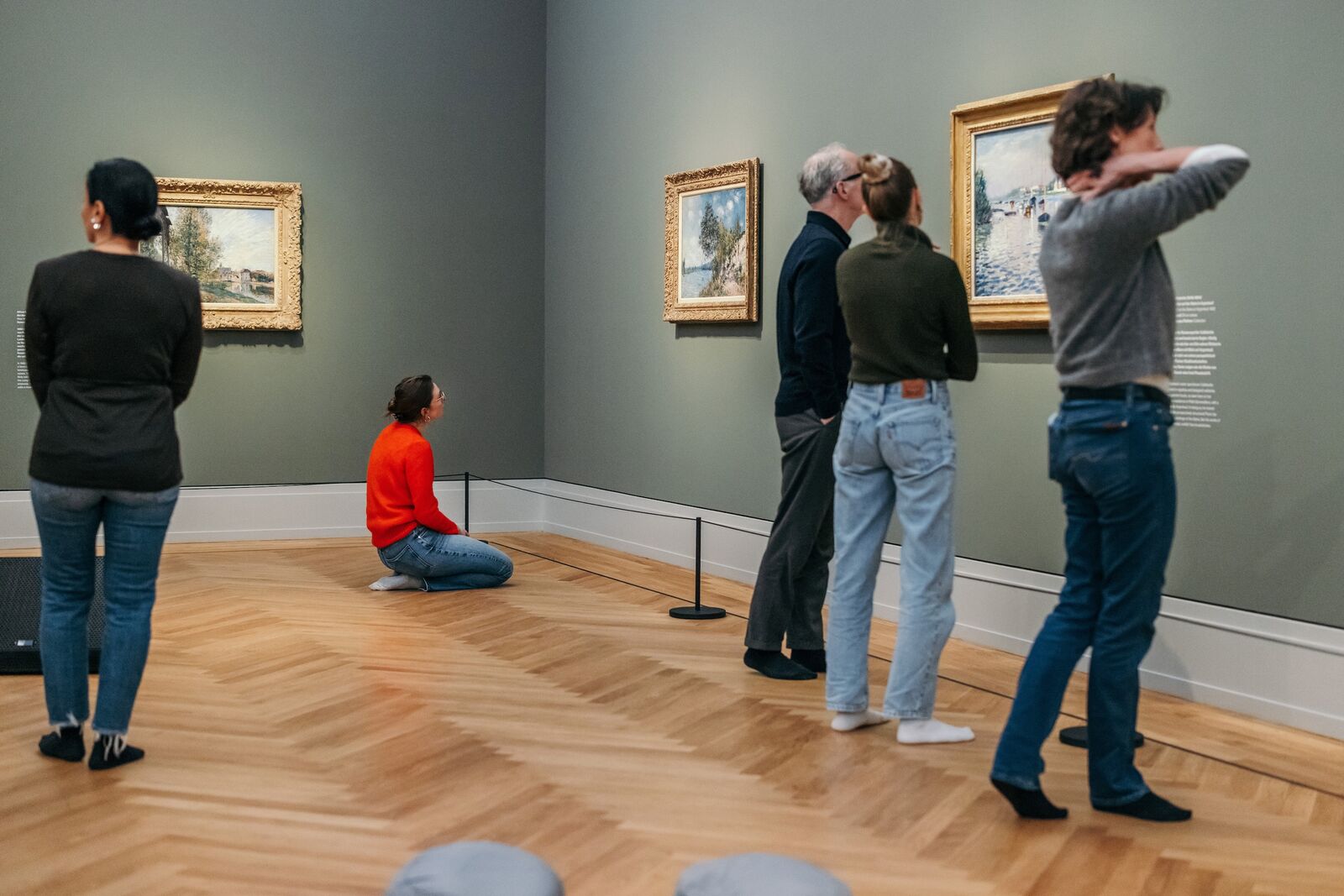
The depth of attention. When you are in a calmer, more focused state, you look differently. You stay longer. And suddenly, something emerges that wasn’t there before.
One visitor described how she usually just walks through exhibitions — and that this was the first time she had truly looked.
That’s exactly the point. This rushing through has almost become a reflex. You want to see everything, but in the end, you don’t really experience anything.
Museums often try to create access through knowledge — through guided tours, context, interpretation.
And that’s important too. Understanding why a painting is significant can open a great deal. But it often remains on an intellectual level. What’s missing is the emotional connection.
A second layer of perception.
Exactly. And that doesn’t come through more information, but through a different state of being. You can’t jump straight from everyday life into a profound experience of art. There needs to be something in between. A kind of threshold ritual. That’s precisely the transition I try to create at the Museum Barberini. When it succeeds, art can move us again.
And that’s what’s missing in everyday life?
Often, yes. That’s why, for me, it’s also a conscious counter-model: creating spaces in which people can once again feel that they are capable of being touched.
Patricia Thielemann founded Spirit Yoga in 2004 and, drawing on numerous international trainings, developed the Spirit Yoga style, which has had a significant influence on modern yoga in German-speaking countries. Today, with two locations in Berlin, Spirit Yoga is considered one of Germany’s best-known yoga schools. Over the past 22 years, she has trained more than 1,000 yoga teachers, advises companies on mindfulness programs, and leads retreats at locations including Schloss Elmau, Sylt, and Thailand. She is also a speaker and author, and has written columns on mental health for Der Tagesspiegel and Handelsblatt.