A Digital Research Platform Reveals the Networks Behind Impressionism
To mark the tenth anniversary of the Museum Barberini, Networks of Impressionism turns its attention to the people and relationships that shaped Impressionism. Artists, collectors, art dealers, and intermediaries all played a part in the movement’s development and international dissemination. But how were they connected? What paths did paintings take before entering museums and private collections? And what personal, economic, and social circumstances shaped the creation and reception of these works?
The digital research platform Networks of Impressionism brings together information from archives, publications, and databases, connecting artworks with their provenance histories, the individuals and institutions associated with them, and relevant historical sources. In doing so, it makes visible relationships that have often remained difficult to reconstruct, requiring researchers to piece together evidence scattered across disparate documents.
Made possible by the Hasso Plattner Foundation and led by the Museum Barberini, the platform is being developed in collaboration with Navigating.art, the Wildenstein Plattner Institute, and international museum partners. At its launch on November 6, 2026, the platform takes as its point of departure the Hasso Plattner Collection at the Museum Barberini, comprising 115 works of French Impressionism and Post-Impressionism. Its scope will expand over time through collaboration with museums and research institutions around the world. In addition, six digital interpretation projects will translate the platform’s research into a range of formats, from an audio guide and a literary audio piece to a graphic novel and a media installation at the museum.
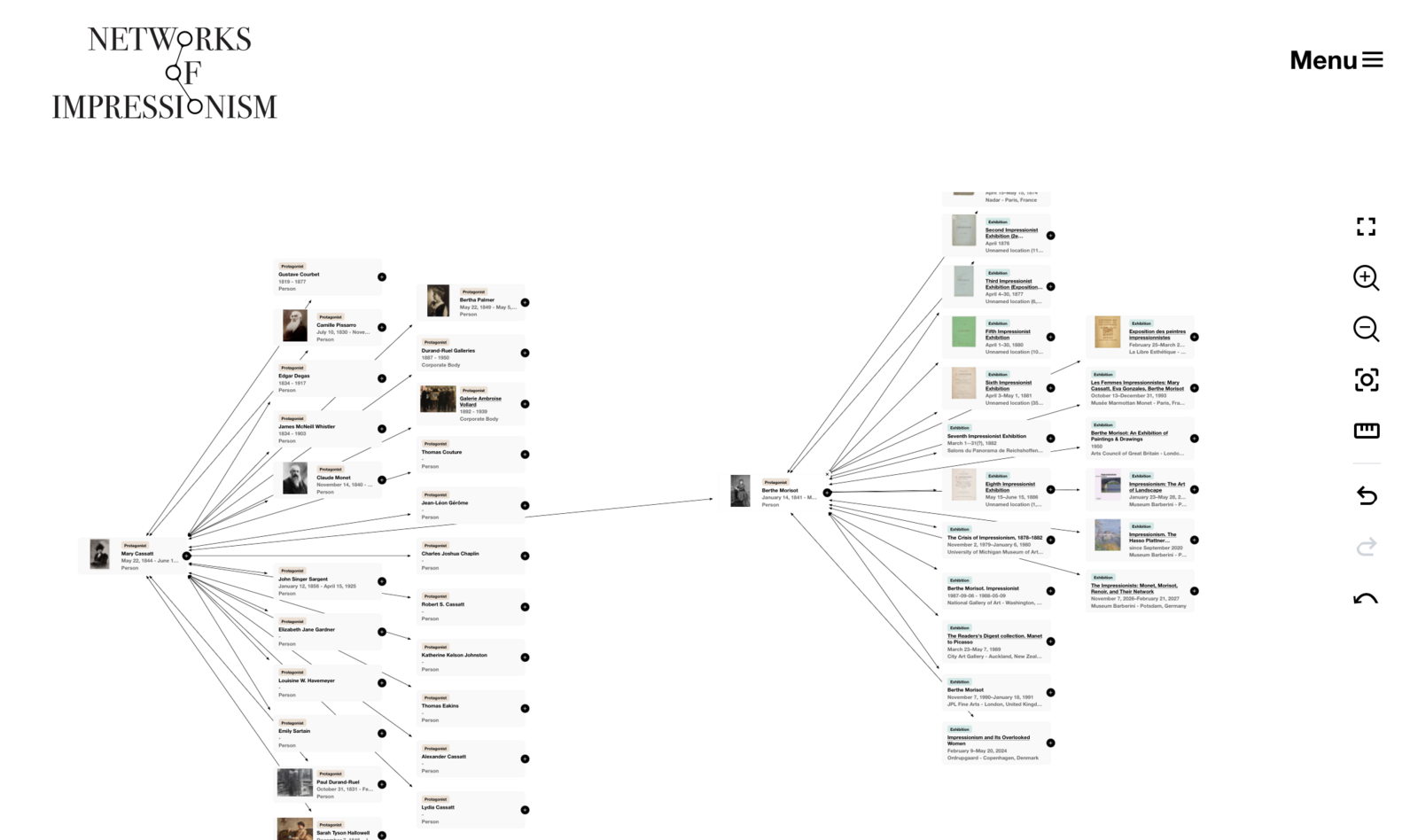
The platform is built around the provenance histories of works in the Hasso Plattner Collection. These histories offer insight into the journeys paintings have made across generations and national borders, leading to the individuals who acquired, brokered, exhibited, or researched them. The platform maps the networks connecting artists, collectors, dealers, and institutions from the 1850s through the 1950s. It thereby illuminates the personal, economic, and social circumstances in which Impressionist art was created, circulated, collected, and received.
Alongside provenance records and exhibition and publication histories, the platform provides access to digitized historical sources, including exhibition and auction catalogs. By linking research data to its underlying documentation, it enables users to trace information back to its sources, critically assess existing findings, and pursue new lines of inquiry. Particular attention is given to women collectors, intermediaries, and art dealers, whose contributions have often remained underrepresented in art history. Dedicated profiles bring their roles within the networks of Impressionism into focus, including cases in which historical records identify them only by their husbands’ names. Labels, stamps, and handwritten annotations on the backs of paintings provide further evidence for provenance research and can help uncover previously undocumented stages in the history of individual works.
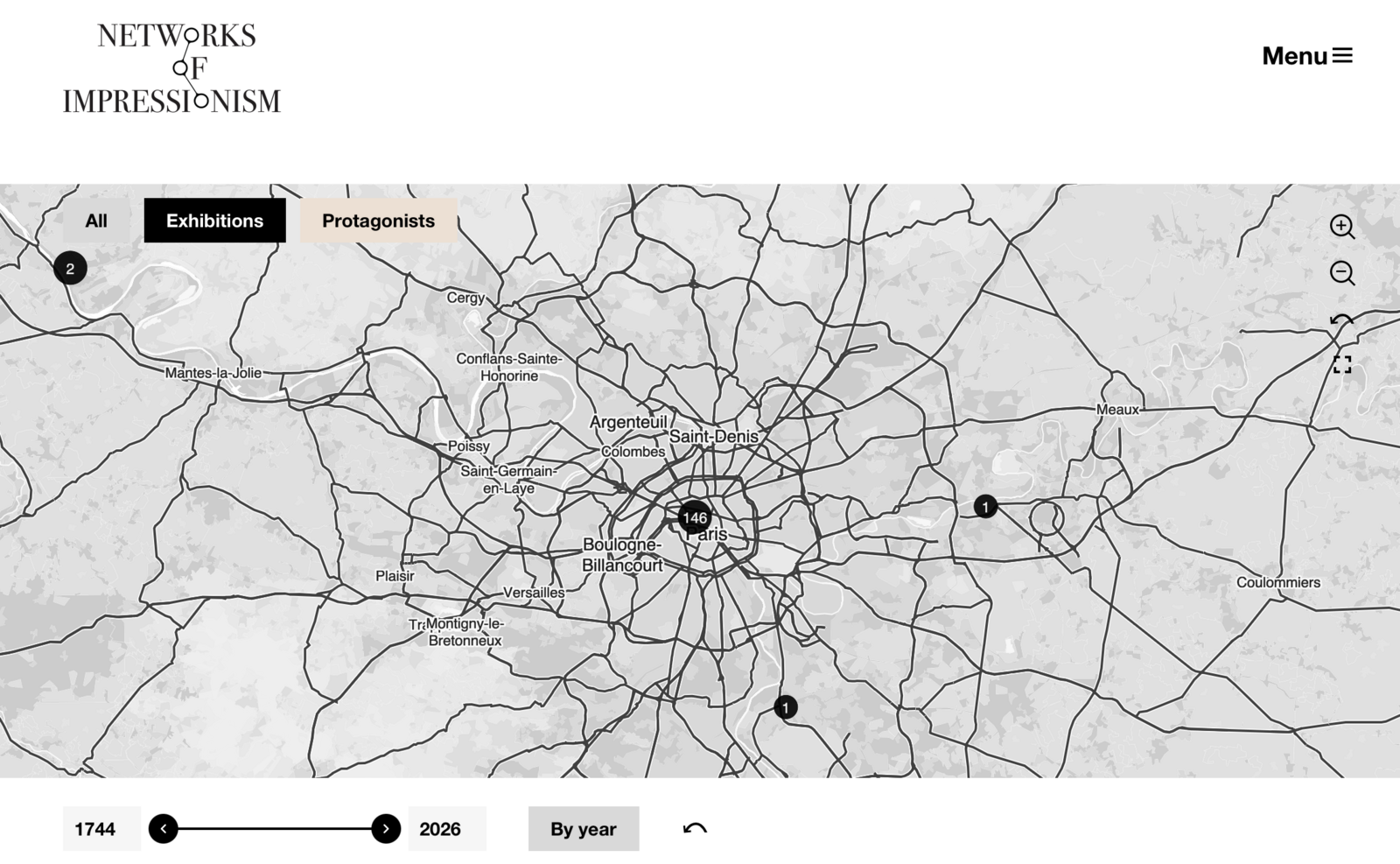
A range of interactive features offers different ways to explore the platform’s data. A timeline, maps, and network visualizations reveal when and where individuals were active, which works they owned, and how they were connected to other figures in the art world. By bringing together artworks, digitized archival materials, and scholarly publications, the platform makes it possible to investigate individual provenance histories as well as broader developments in the art market and the international history of collecting.
“The Hasso Plattner Collection is a central starting point for our scholarly work. With Networks of Impressionism, we are making the knowledge generated through this research accessible not only to scholars but also inviting art enthusiasts to discover the history of Impressionism from new perspectives. Our goal is to continue developing the platform in partnership with international collections and research institutions. In doing so, we hope to create an international platform for the collaborative study of Impressionism—one that makes knowledge transparently accessible and enables new forms of scholarly cooperation.”
–Ortrud Westheider, Director of the Museum Barberini
A range of interactive features offers different ways to explore the platform’s data. A timeline, maps, and network visualizations reveal when and where individuals were active, which works they owned, and how they were connected to other figures in the art world. By bringing together artworks, digitized archival materials, and scholarly publications, the platform makes it possible to investigate individual provenance histories as well as broader developments in the art market and the international history of collecting.
The platform’s scholarly foundation is being developed in collaboration with the Wildenstein Plattner Institute, which makes extensive archival and published resources on Impressionist artists, collectors, and dealers accessible to researchers. A substantial portion of these materials is already available online. The Institute also administers and publishes the research findings of catalogue raisonné committees in New York and Paris. Its online catalogue raisonné projects include publications on Claude Monet, Camille Pissarro, Pierre-Auguste Renoir, and Maurice de Vlaminck. The associated research also encompasses the provenance histories of the works documented in these catalogues.
The platform’s technical infrastructure is developed and maintained by Navigating.art. Since 2021, the system has been used for digital catalogue raisonné projects undertaken by the Wildenstein Plattner Institute and other institutions. It is built on a relational database and a standardized data model designed to connect research information and facilitate its use across institutional boundaries. Navigating.art follows the FAIR principles, which ensure that research data are Findable, Accessible, Interoperable, and Reusable, and adheres to established standards in provenance research.
The platform brings together data and sources from multiple institutions while preserving the provenance and individual research context of each contribution. Information can be compared across institutional collections, sources can be traced with precision, and historical relationships can be investigated collaboratively. In this way, Networks of Impressionismestablishes a foundation for sustained cooperation among museums, collections, and research institutions beyond institutional boundaries.
By digitally connecting these resources, the platform opens up new ways of relating the histories of individual paintings to the broader developments of Impressionism. Provenance chains can be traced, historical art-market movements examined comparatively, and relationships among individuals, artworks, and institutions followed over extended periods. At the same time, the platform brings previously overlooked figures and connections into sharper focus.
Transparent source documentation is central to this approach. It allows research findings to be examined, information to be critically evaluated, and new discoveries to be incorporated. Networks of Impressionism is therefore conceived not simply as a digital reference resource, but as a foundation for ongoing scholarly exchange among researchers, museums, and collections around the world.
As international museum partners are gradually integrated, the body of knowledge available through the platform will continue to grow. Comparing holdings across different collections will make it possible to investigate broader historical developments and raise new questions about the history, circulation, and reception of Impressionism.
“Provenance and art-market research relies on sources that are often dispersed across archives, libraries, and collections. Analyzing these materials is time-consuming, particularly when reconstructing complex ownership histories or the relationships among dealers, collectors, and institutions. Networks of Impressionism brings this information together and provides transparent access to the underlying sources. It makes it easier to trace the histories of individual paintings, which often span more than 150 years, and to situate them within broader historical contexts.”
–Linda Hacka, Provenance Research Associate at the Museum Barberini
The research platform is complemented by six digital projects that translate its scholarly findings into new forms of interpretation and engagement. Bringing together art, literature, photography, sound, and interactive technologies, these projects offer new ways of encountering the people, places, and stories behind the paintings. From a graphic novel to an immersive installation at the Museum Barberini, they bring the networks of Impressionism to life through a range of distinct experiences.