
Félix Vallotton: Longing and Seduction
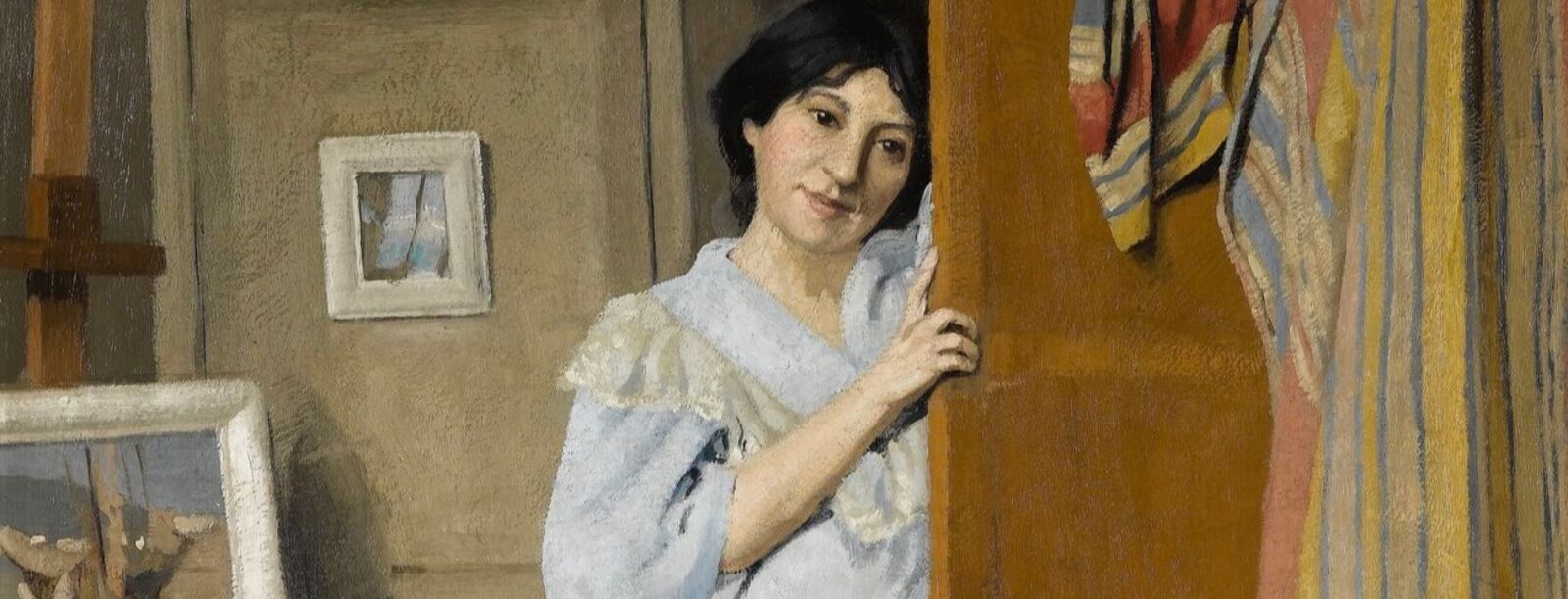
Around 1900, Paris was the undisputed center of the European avant-garde. At the age of just sixteen, Félix Vallotton (1865–1925) moved from Lausanne to the French capital, where he emerged as one of the most original voices of modern art.
As a member of the Nabis from 1892 onwards, Vallotton was in close dialogue with Pierre Bonnard, Édouard Vuillard, and Maurice Denis. As the only foreign artist in the group and because of his reserved and unconventional personality, he was nicknamed Le Nabi étranger. Yet despite his close ties to the Nabis, he pursued a distinctly independent artistic path and developed a highly individual visual language. He fused the group’s decorative Symbolism with psychological intensity, clear, reductive forms, a dramatic use of color, and an often ironic view of the bourgeoisie. In his late work, Vallotton engaged with Henri Rousseau’s deliberately naïve conception of the human figure, while some still lifes and landscapes reveal an affinity with the New Objectivity. Alongside his painting, Vallotton fundamentally transformed the medium of woodcut, developing a radically simplified graphic language that gave rise to some of the most compelling print cycles of the fin de siècle. He also illustrated books and journals and wrote plays and novels. Taking the dynamic interplay between printmaking and painting as its point of departure, the exhibition traces the evolution of Vallotton’s artistic idiom.
The exhibition is a collaboration with the Ordrupgaard Museum in Charlottenlund, where the show will be on view from March 10 to June 25, 2028.